Why Hesco is the most reliable flood barrier
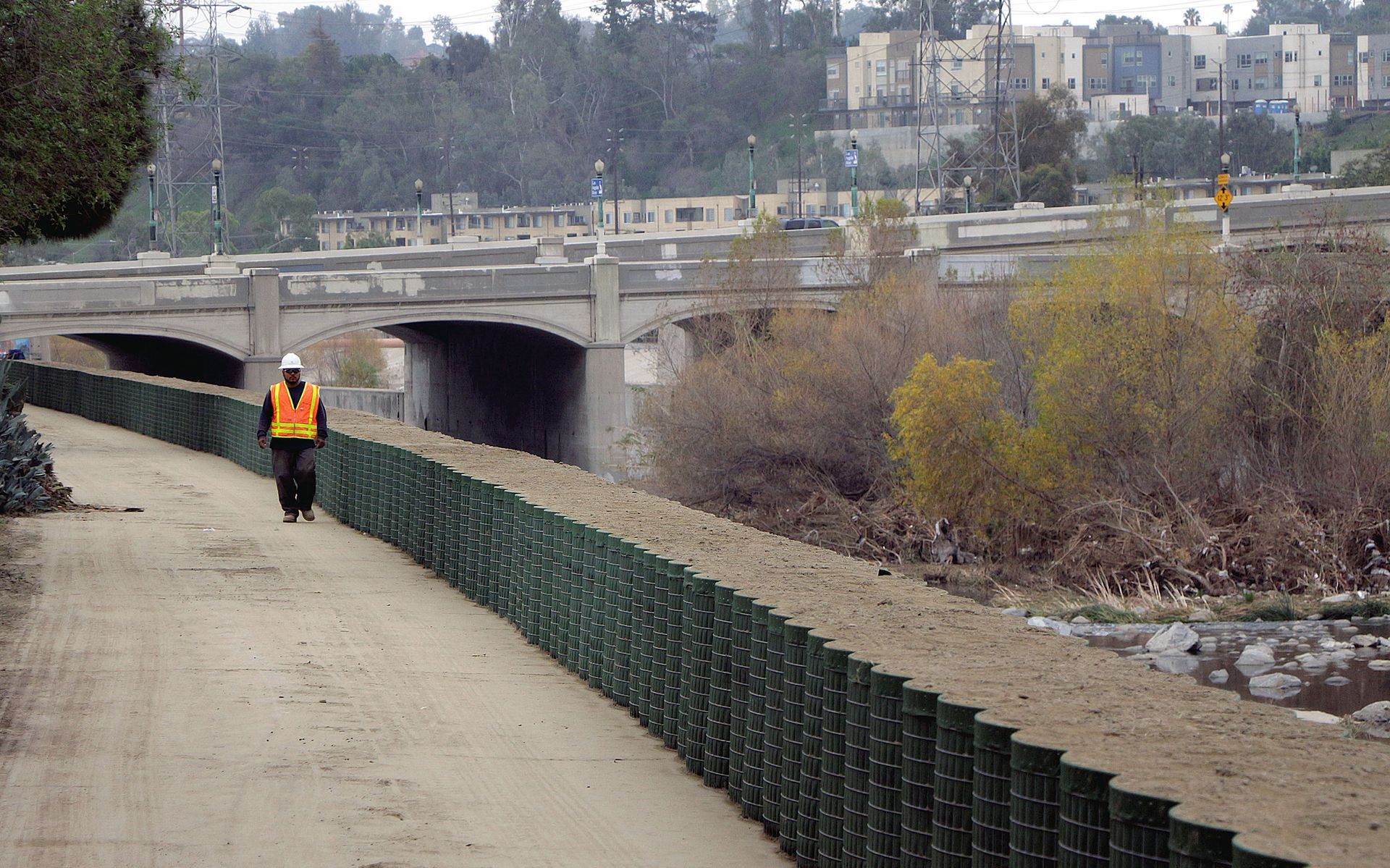
There are many reasons why we consider HESCO to be the most reliable flood barrier on the market, and this is a summary that includes both the pros and the cons of the HESCO flood barrier.
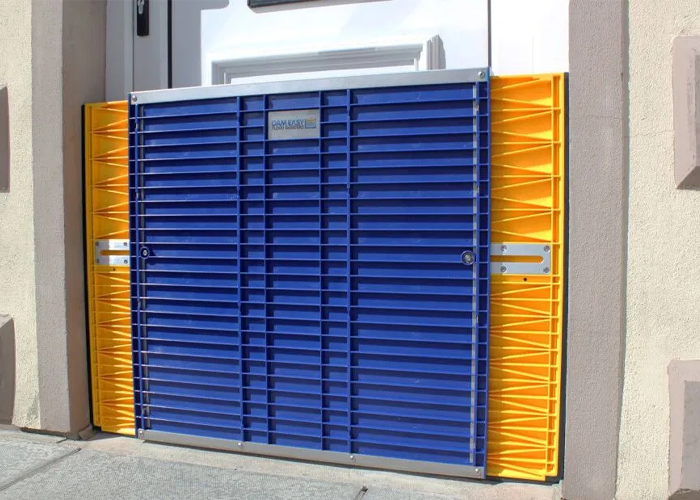
Flood Defense Group has the largest selection of flood barriers on the market within the USA and will be the first one to tell you there is no 'best' flood barrier, but when it comes to overall performance, some barriers are clearly better than others. This is because no two floods are the same. Some floods are only a few inches deep, whereas other flood problems may require several feet of flood protection. Alternatively, some flood barriers are required to simply protect a door from flooding, whereas other flood barriers are required to protect entire communities. This is a summary focused on the HESCO flood barrier.
Ease of Construction
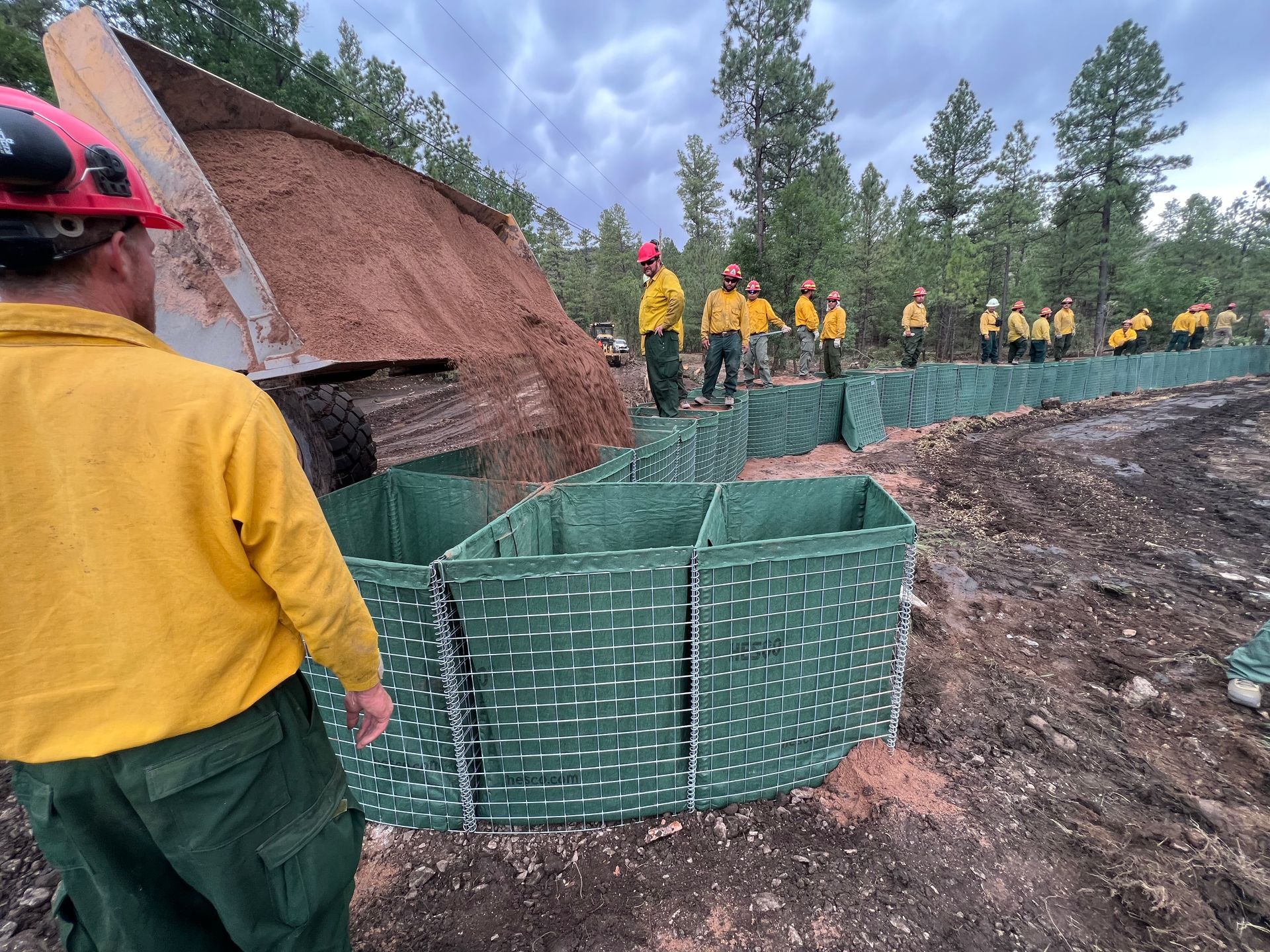
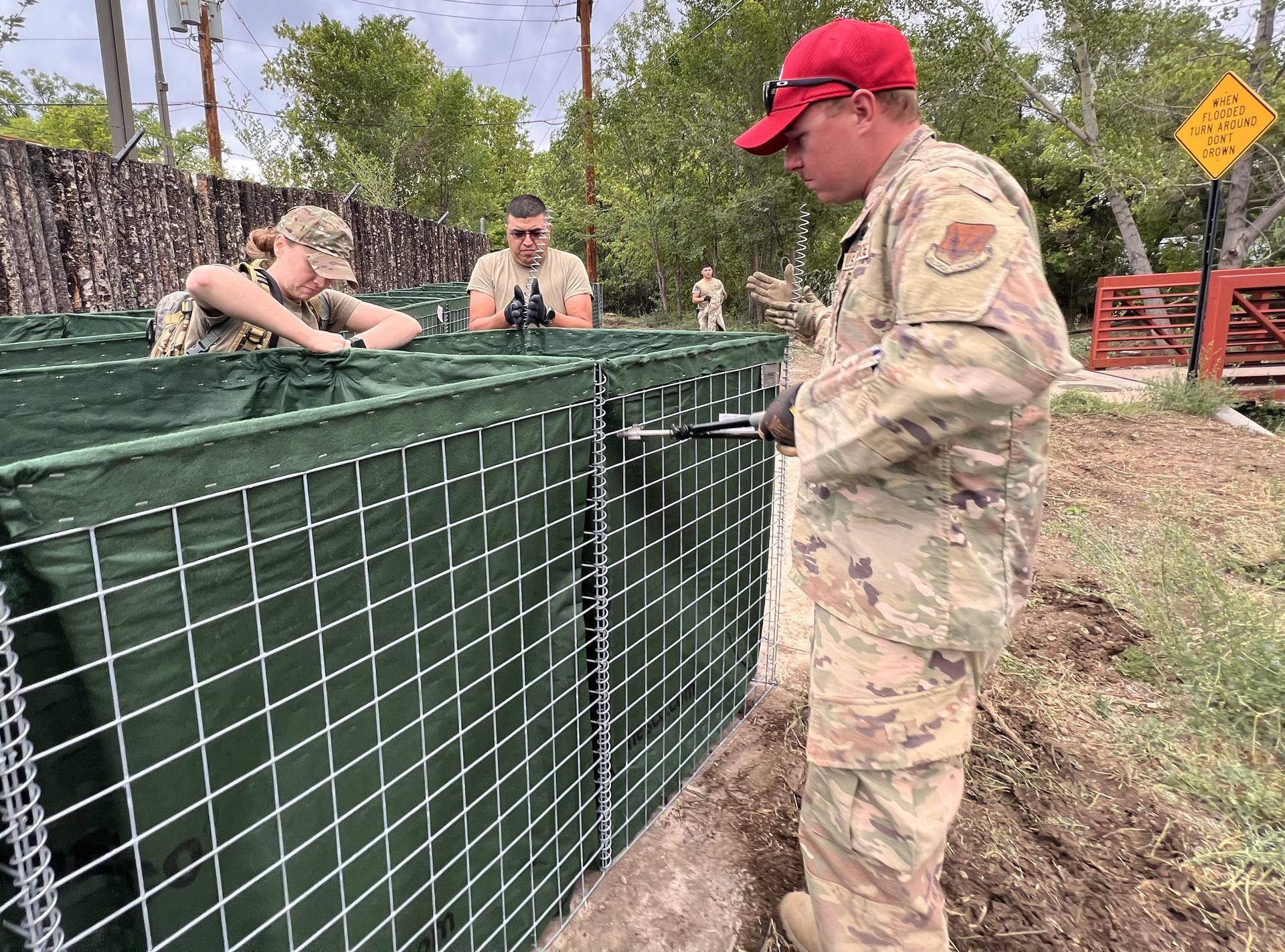
This is a simple product that does not require specialized knowledge to construct. It comes flat-packed, so you simply open it up, connect individual sections together, and fill with sand or soil while making sure to compact the fill material. There are only 3 components, which include the fabric-lined baskets, joining pins to connect individual sections together, and dirt to fill it up.
Impact Resistance
There are many different types of flooding, and if you are trying to redirect debris flows associated with forest fire burn scars or protect yourself from the violence of a hurricane storm surge, the product has clear advantages.
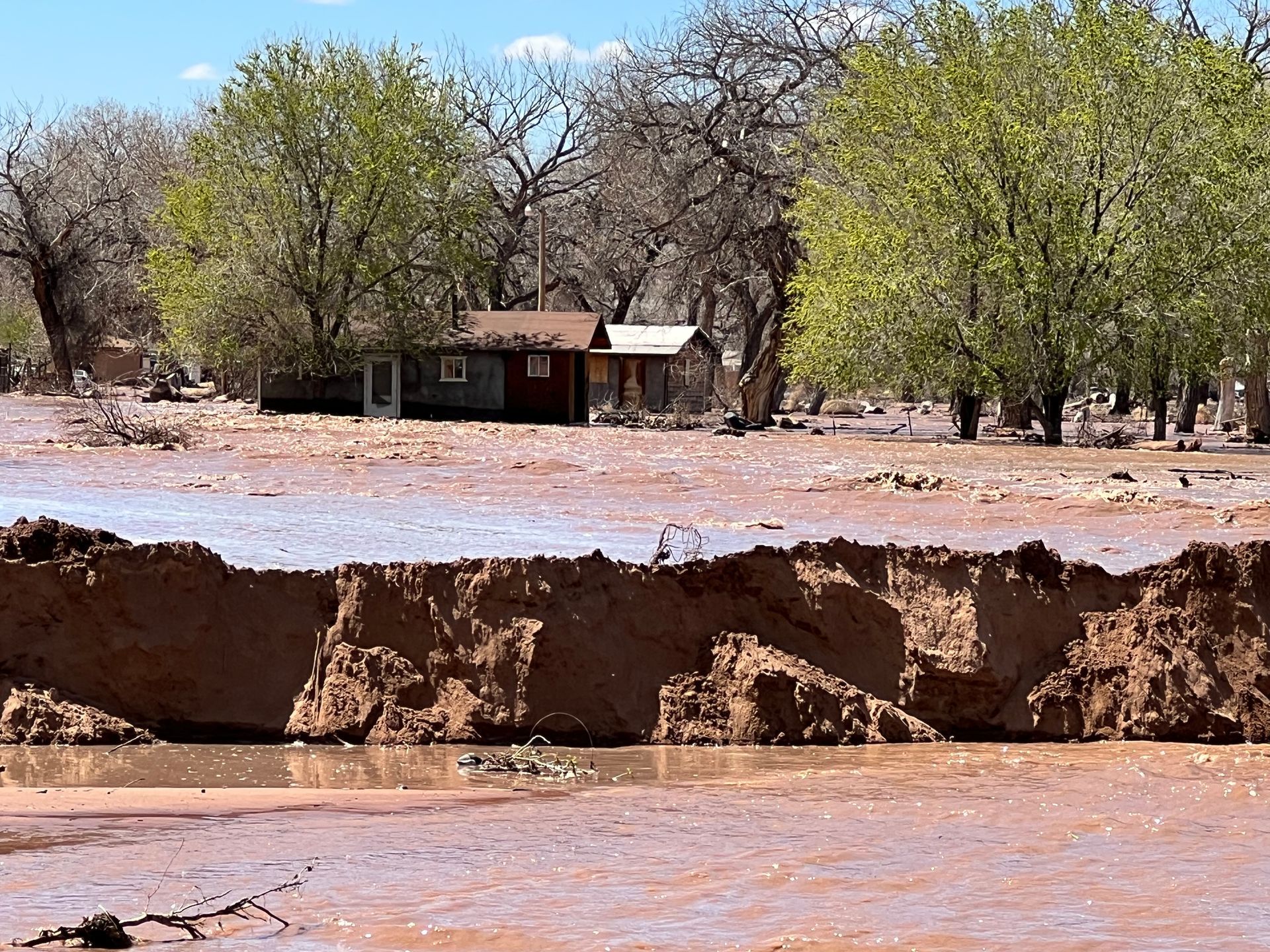
Debris flows are a type of flooding that occurs when rain falls on freshly burned terrain associated with wildfires. As water flows downhill within burn scar areas, it quickly gains velocity because there is no vegetation to slow the velocity of runoff, and erosion takes place. This can, and does, dislodge huge rocks, bring down large trees, and fill a river with mud and debris which act as projectiles that are capable of bringing homes off their foundations and quickly plowing over most alternative flood barrier designs on the market.
Alternatively, hurricane storm surges are a type of flooding where floodwater is pushed inland with powerful wave action. This type of flooding creates massive pressure and 'pushing force' as waves slam into the flood barrier.
These are two of the most powerful and destructive types of flooding Mother Nature has to offer, and the weight of the HESCO barrier gives it the best ability to stay in place with impacts from rocks, trees, and wave action.
It Won't Float Away
A common problem that most people don't think about is: what happens if/when water builds up on the dry side of a flood barrier? Many other flood barrier designs would float away. One good way to understand this is that if you were to throw a flood barrier designed with plastic, or PVC-coated fabric like water-filled flood tubes, into a swimming pool, it would not quickly sink to the bottom. That means that these types of flood barriers would become buoyant if water was on both sides of the barrier, and moving water would simply wash it away. This would happen even faster if a plastic or water-filled flood barrier was hit with wave impact or debris impact.
HESCO barriers are filled with sand or soil, which keeps them in place even if water builds up on the dry side of the barrier or overtopping of the barrier takes place.
Height of Protection
The ability of HESCO barriers to be stacked to achieve great heights sets it apart from other designs on the market. For most other flood barrier options, you purchase the product, which provides protection to a specific height. If your flood threat increases, you would have to purchase a taller barrier, which would be an expensive alteration.
Here is an example of a 16' tall HESCO floodwall. Initially, this floodwall was 12' tall, but the flood threat increased. HESCO flood barriers provide you the option to simply stack additional barriers on top to achieve greater height!
NOTE: In this example, additional rows of HESCO were laid out to make it thicker and taller to deal with the massive pressures associated with 16' of floodwater depth.
Easily Modified
When deploying flood defense barriers, it is common to have obstructions that are difficult to work around. This can create weak points within your flood defenses or simply be impossible to deal with for most flood barriers on the market.
Flood Defense Group regularly modifies the HESCO barriers to work around or through obstructions.
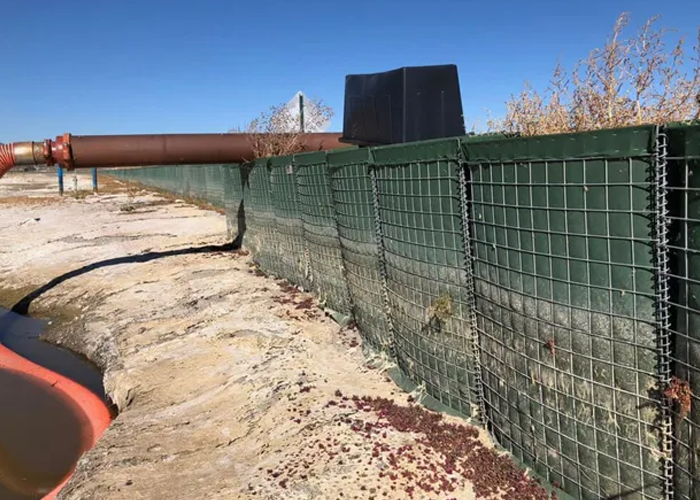
Here is an example of protecting an oil and gas facility from flooding. You can see that we had a stack of pipes that were filled with oil and gas which could not be moved or broken, but we needed to transition the HESCO floodwall past these pipes without creating a weak point. In this case, we simply modified the HESCO and plumbed the pipes through the wall. This is one of countless situations where we modified the barrier to conform around the problems we encountered.
In the other photo example, you can see how we were able to modify the bottom of the barrier to conform to a set of stairs. This product can be modified to conform around obstructions on the ground, sides, or top of the barrier to provide flood protection without creating weak points within your protective perimeter.
Track Record of Performance
HESCO flood barriers have been tested by authorities around the world, which includes the US Army Corps of Engineers, but even more importantly, it has been tested in the 'real world' by Mother Nature hundreds of times.
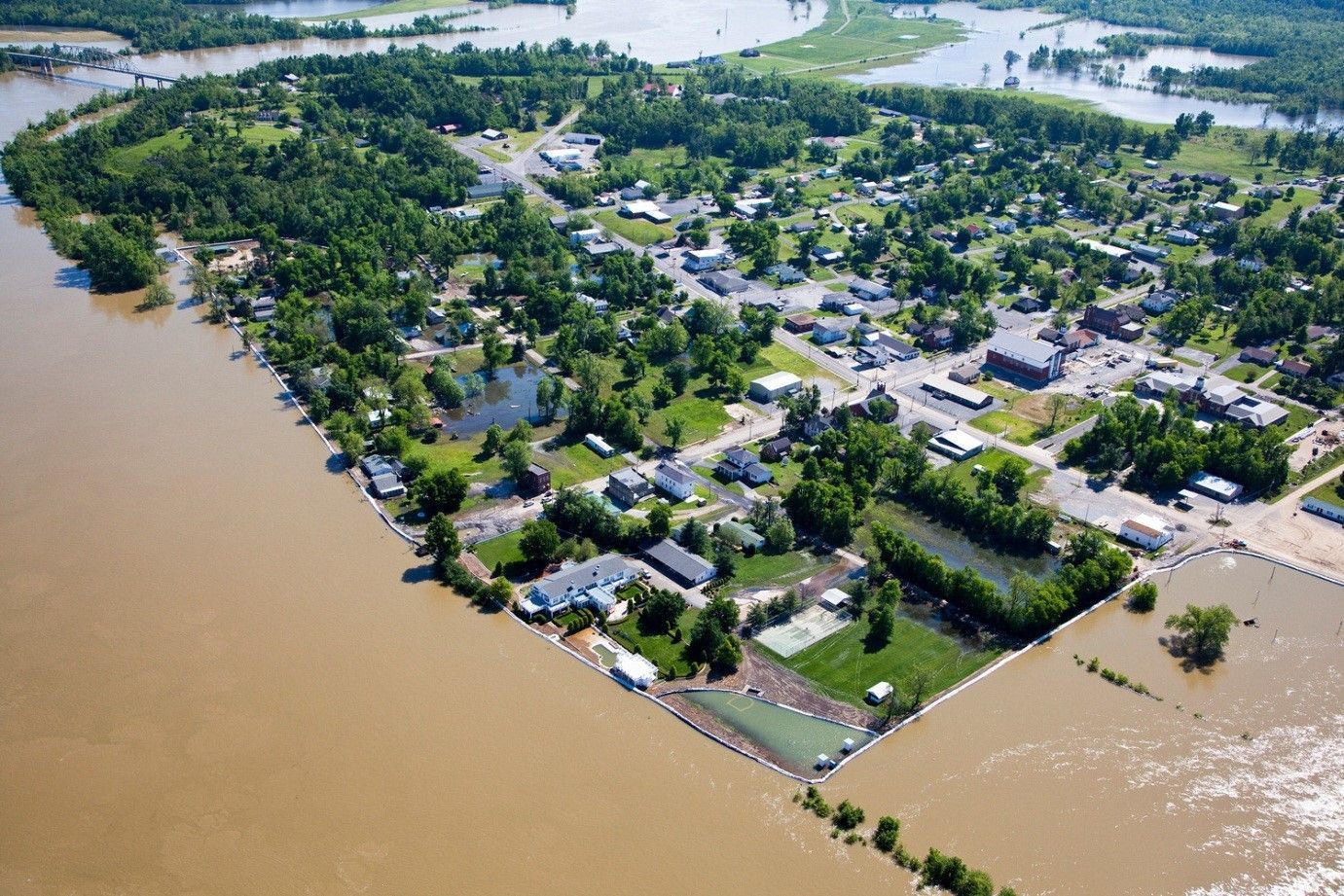
There are countless case studies of HESCO barriers withstanding the most dangerous floodwaters known to man. This includes debris flows and hurricane storm surges, in addition to the simple task of keeping the Mississippi River within its banks.
If flood defense is your responsibility, you want a barrier that you know works, and not an untested barrier that you are told works by an untrusted source.
Lifespan
In some situations, you need to deploy a flood barrier that will have to be in place for many years. There are several locations within the USA where HESCO barriers have been in place for many years and continue to hold back floodwater from multiple events.
Many flood barrier designs on the market have components which degrade quickly from exposure to UV rays and other environmental conditions. This makes them unsuitable for longer-term applications. Plastic barriers can crack, and plastic sheeting that is required to cover other flood barrier designs will quickly degrade and even blow away in high wind events, leaving environmental contamination.
Dual Functions
We often describe HESCO as a 'soil-filled building block' which can be vertically stacked. As a result of this, the product is often used as a dual-function wall for a soil embankment and a flood barrier that can protect against erosion.
Logistically Friendly
You can load 4,500 linear feet of the 4' tall HESCO flood barrier onto a semi-truck because it comes flat-packed. This is a huge benefit logistically speaking. This product does not require significant space for storage, and the ability to quickly mobilize miles of flood barriers to the build location provides it a logistical advantage. When floodwater is incoming, you do not have the luxury of time to mobilize and deploy flood defenses, and the logistical ease of mobilizing this product to the work site provides a great advantage.
Economical
The economics of HESCO is one of the reasons it is so popular with local, state, and federal organizations. When you have a large scale flood event, you need a significant amount of barriers. The cost of HESCO per linear foot is a clear advantage when conducting price comparisons. The price difference of HESCO compared to other solutions becomes more profound the higher you go.
For example, the average price for a 4' tall reusable flood barrier is about $100 per linear foot or more. The price of a 4' tall HESCO barrier is about $40 per linear foot (not including sand).
If you want to achieve 8' in protective height, the average price of a reusable flood barrier is about $375 per linear foot, but if you stacked the 4' tall HESCO barriers with 2 rows on the bottom and 1 row on top, the cost is around $120 per linear foot to achieve 8' in protective height (not including sand).
In order to provide a thorough review of the product, it is important to list the negative attributes of HESCO. Every flood barrier has negative attributes, and these are the ones associated with HESCO.
Reusability
There are organizations who reuse HESCO barriers by pulling it out with a HESCO Lifting Beam, but in most cases, people don't reuse it. As a flood barrier provider, we understand that some organizations reuse it, but for liability purposes, we will not sell a reused HESCO barrier. This is because we cannot guarantee the factory weld strength of the welded wire mesh this product is comprised of.
Logistics of a Soil-Filled Barrier
Since this barrier is filled with dirt, you need machinery like a backhoe, front-end loader, or Bobcat-type equipment to fill it up. This is a resource that most residential homeowners do not have readily available. Also, it is physically demanding to compact the fill material (by foot) during the construction process.
Yard Damage
During the filling process, machinery is used to fill the barriers, and this can cause significant damage to an average residential yard. If you have machinery driving back and forth over your grass, it will cause damage.
Removal
When the flood event has passed and you need to remove the product, it leaves a pile of dirt. It can be logistically demanding to remove and dispose of the product.
Summary
There is no such thing as a flood barrier that is 'the best' because no two floods are the same. Flood barrier selection will often depend on depth of floodwater, working surfaces, speed of deployment, type of flooding, logistical resources, location, and economics.
However, when taking all of the pros and cons into account, and the ability of a barrier to be counted on to hold back floodwater, HESCO flood barriers clearly have the attributes to make it the most all-around barrier that can be counted on to keep you safe from flooding.
If you are looking for a flood barrier that is best for you, Flood Defense Group can supply a variety of flood barriers throughout the USA. If you are looking to buy HESCO or purchase any other flood barriers in the USA, Flood Defense Group can help.
Call us today if you are interested in learning more about what flood barrier may be best for your unique location and flood vulnerabilities.
Flood Defense Group
info@flooddefensegroup.com
1-208-585-1815